



News
- 2021-09-11 11:15:44
-
There are many reasons why you might want to sew Emboidered Patches on your clothes. The primary reason why many youngsters consider sewing Emboidered Patches on their clothes is – it is ultra-cool. At times you just have to – there is a hole in your clothing which is un-repairable – this Emboidered Patches is now your savior. Keep it on top, and the hole as good as disappears.
If the garment is made of fabric, a hole is an inevitability, especially if you have kids at home or you are a gardener / tinker or you did an overzealous washing and scrubbing. They appear on sleeves and on jeans and bags and backpacks – and the horror of it, even on leather jackets. Check out the post “Clothing Repair – 9 ways to repair holes and tears on fabric” for some more ideas to mend them
Be it the funky jean Emboidered Patches or the cutsey sequin patches on tops or badges proclaiming your loyalty to sports teams and such – Emboidered Patches are everywhere.

Where to get Patches to sew over holes
Emboidered Patches are fabric pieces after all. They can be store brought as in the case of those Embroidered Patches you get in many shapes and sizes. The ones you get in many numbers in many colors are handy too.
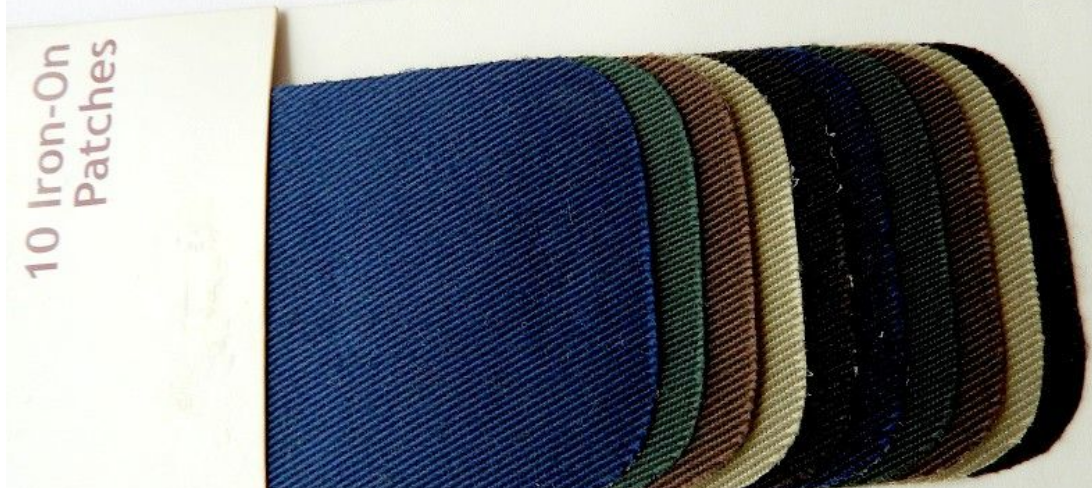
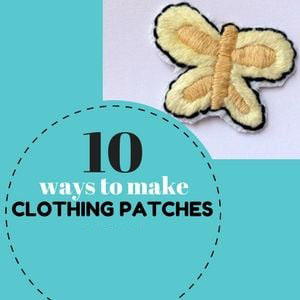
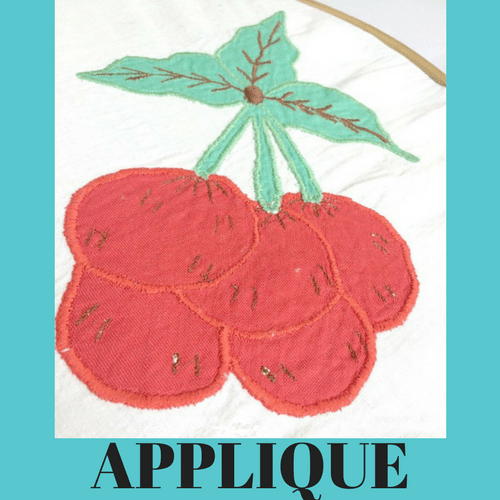
You also get beaded Emboidered Patches and sequined patches. You can make Emboidered Patches yourself with felt ( which does not fray on the edges) or other methods. Checkout the 10 ways to make Clothing Patches . and How to applique – tutorial.
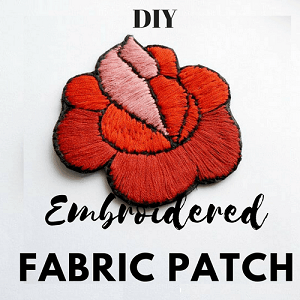
You can also make the Embroidered Fabric Patch yourself easily following the tutorial.
Then you can cut the fabric for the Emboidered Patches from the garment itself. If it is a small hole, check for extra fabric in the hem. May be the garment has a big enough turned under hem which can be used as a Emboidered Patches for a hole; if you are game for shortening the skirt or dress for a Emboidered Patches I would not blame you; anything for rescuing a favourite dress. If the garment has facing, may be it is big enough for you to cut out a little bit to sew over a hole.Contrast fabric pieces are used as Emboidered Patches and they bring a certain interesting look to the garment as well.
1. Iron on Patches

These are Emboidered Patches ( embroidered and otherwise) which you can attach by applying heat on. This is the easiest way to attach Emboidered Patches. These patches have a sticky back which is activated when heat is applied. Some have a backing sheet which has to be removed , some have a plasticky back.

How to attach the Iron On Patches
Step 1
Take the Emboidered Patches – you may want to cut your simple patch in interesting shapes or keep it as it is.
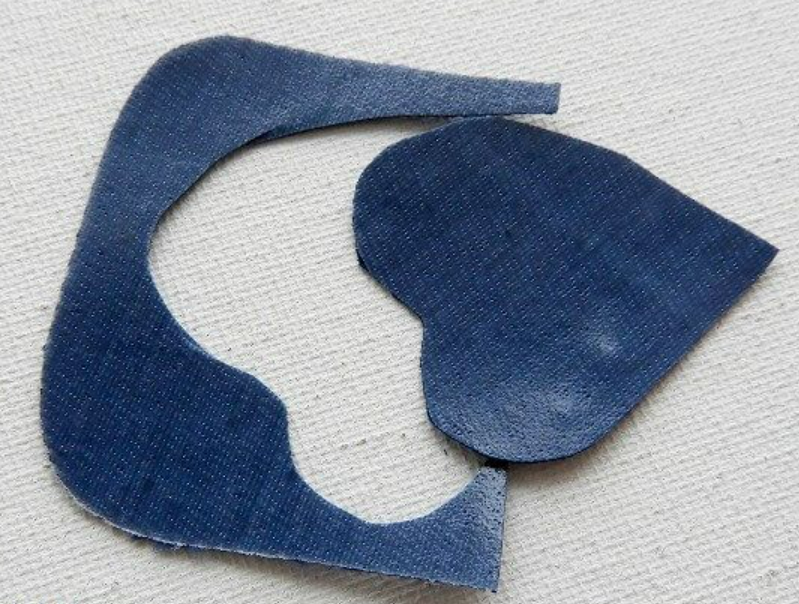
Keep the Iron On Patch where you want it to be (if it is a hole the Emboidered Patches should fully cover it with 1/4 inch all around). Set the iron temperature to that of cotton.
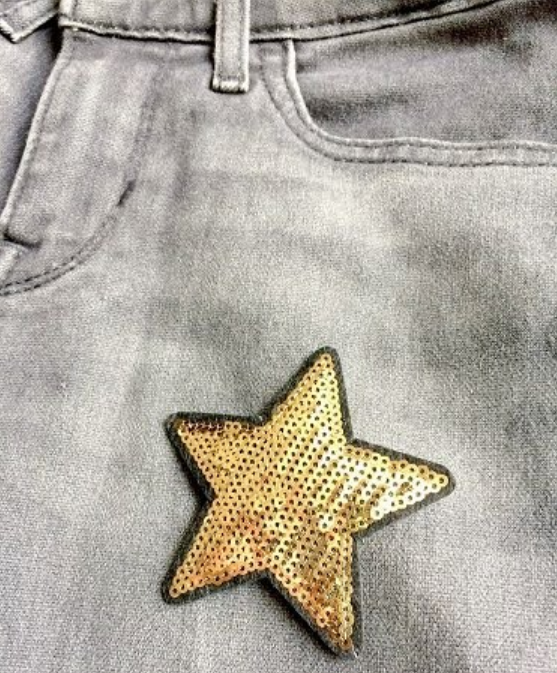
Step 2
Spray a little water on the back of the Emboidered Patches.Keep a piece of pressing cloth (any thin cotton cloth) on top of the Iron On Patch. This is so that the heat do not damage the Emboidered Patches.
Step 3
Use the hot iron to press evenly. Iron for about 20-30 seconds.
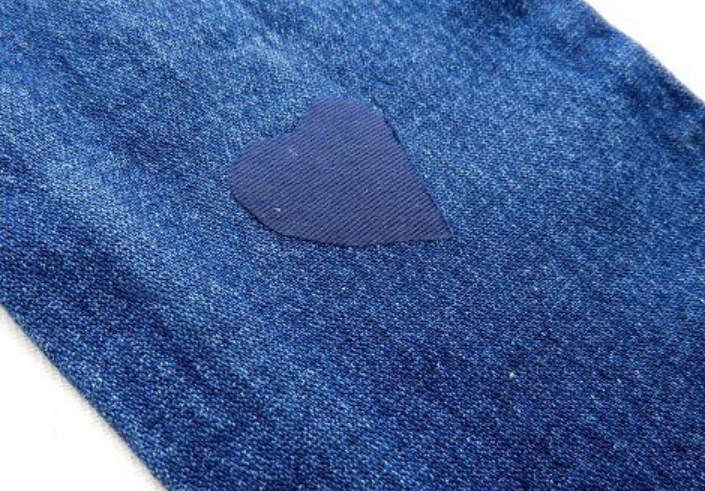
Ensure that the heat setting of your iron is for a cotton cloth. Please do not use the iron on Emboidered Patches on elastic fabrics, leather, waterproof rainwear, and nylon fabrics, as the material may be ruined with heat.
2 . Appliqued Patch
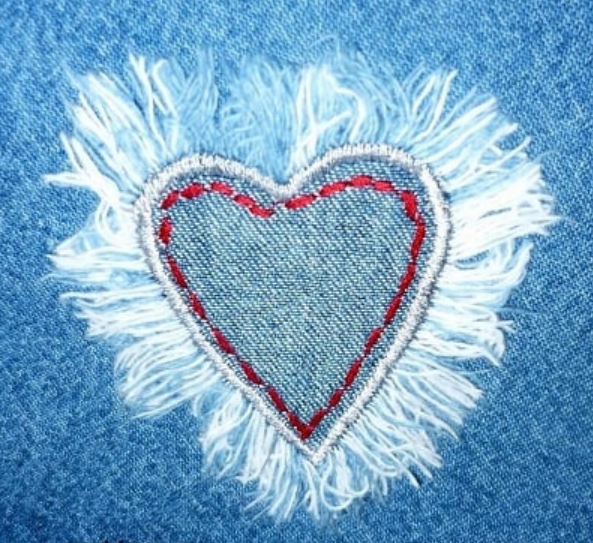
The fabric Emboidered Patches is Hand or machine appliqued on the face of the garment – hand sewn blanket stitch is used in hand applique (with turned under edges) or closely packed zig zag stitches are made around the edges of the Emboidered Patches with a sewing machine.
3. Attach with Running stitch
If you have a beautiful ready made Emboidered Patches this is the easiest way to attach the patch. First you have to temporarily attach the Emboidered Patches with fabric glue or glue stick. Now sew along the border of the Emboidered Patches with a thread matching the patch.
4. Reverse Applique Patch
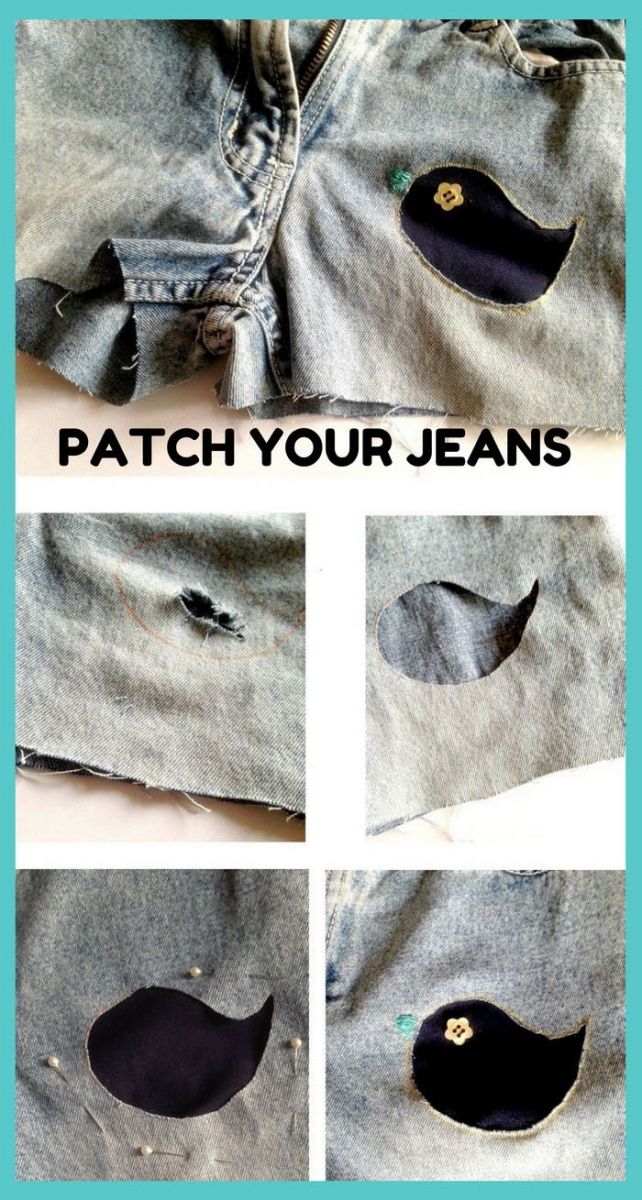
Reverse applique refers to applique done by keeping the Emboidered Patches on the back of the hole. Stitching is done around the edge of the hole. The hole should be cut in the shape of the design.
Satin stitches ( close zig zag stitches) are usually done. I have done a simple straight stitch along the edge of the cut design. I had to use two spools of thread together in the sewing machine so that the stitching line will be visible. You can use top stitching thread for a better look.
You can find 4 different ways to do reverse applique here.
5. Hand sewn set in Patch
Set in Emboidered Patches is a patch ( self fabric or contrast fabric) place under the hole, on the wrong side of the garment. This is sewn from the underside.
How to sew a Set-in Patch
Step 1. Prepare the hole – trim away the ravelled thread on the hole and try to make it square shaped.Make a small slash 1/4 inch on all corners.
You have a 1/4 inch edge now for the hole sides. Turn under these edges and press in place
Step 2 Cut out a square Emboidered Patches which measures a little over 1/4 inches ( almost 1/2 inch) bigger on all sides. Turn under 1/4 inch from all edges of the patch to the right side and press.
Step 3 Keep this Emboidered Patches under the hole right side up. Match prints or stripes; check the direction of the weave of fibers and align if possible . Pin in place or better baste in place.
From the wrong side hem the Emboidered Patches on the garment. Now turn to the right side and hem the hole edge to the patch with slip stitches.
6. Handmade Overhand Patch
This is a Emboidered Patches ( self fabric or contrast fabric) sewn from the rightside of the garment ie face of the garment. If you are patching a thick fabric the overhand patch should be done with a thinner fabric , otherwise it will project out.
How to sew an Overhand Patch
Cut the hole in a square shape ( the existing hole should be made to look like a square) Cut out a square piece of fabric which is slightly bigger ( 1/2 inch) than the hole. Press the edges 1/4 inches inside
Keep it on top of the hole. Baste stitch along the edge .
Turn the garment wrong side out. The edge of the hole and the fabric patch piece will be together. Make overcast stitch all over the edge.

7. Flannel/ felt Patch ( hand sewn)

This Emboidered Patches is a piece of felt in a matching color or contrasting color. Cut a square-shaped fabric Emboidered Patches (large enough to cover the hole). Place the patch on the top of the garment, matching the warp threads of both the garment and patch, then baste. Catch stitch to the garment or use blanket stitches or buttonhole stitches Turn the garment to the wrong side and cut the worn portion away, then catch stitch to Emboidered Patches. Remove basting stitches. You can keep the felt patch on the underside also. The advantage in using felt is that the cut edges does not fray.
8. Darning Patch ( Machine sewn)
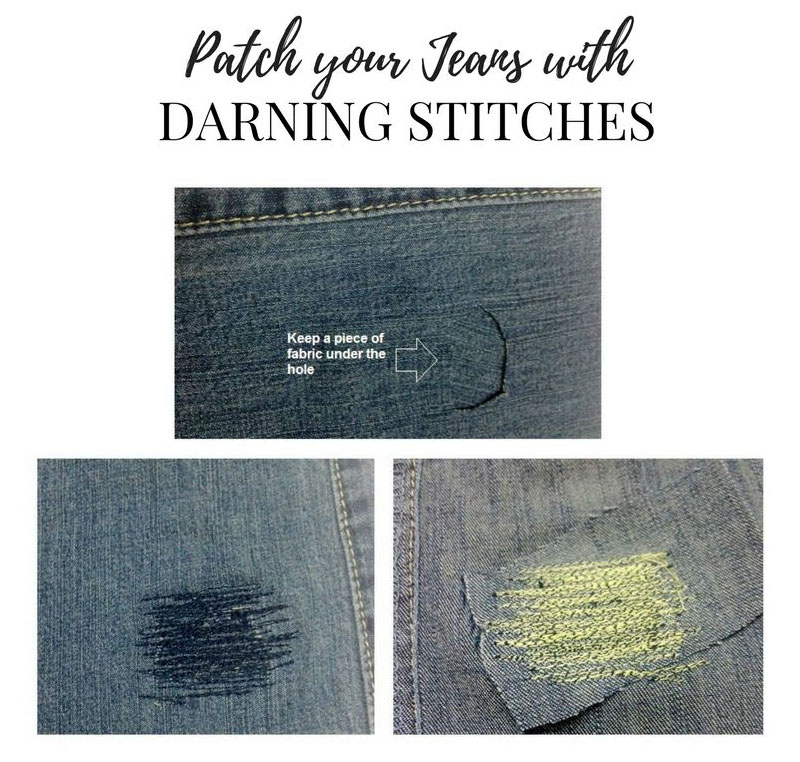
This is done by keeping a Emboidered Patches piece (self fabric) under the hole and making very closely packed straight stitches (of very short length) up and down all over the hole and edges, catching the Emboidered Patches underneath and the edges of the holes – Just go wild. Use your reverse sewing switch as soon as you reach down , go up, come back – stitch all over the place.
Use an exact match colored thread on top and bobbin. Do not choose a light colored one at any cost (this will make stitches visible unless you want that effect); if you cannot get an exact match choose a darker one.
9. Special fabric Patch
You can make these yourself from interestingly textured fabric you have at home or machine embroided on a organza or similar sheer fabric and attach it directly on to the garment / bag. After embroidering cut out the extra from the Emboidered Patches.
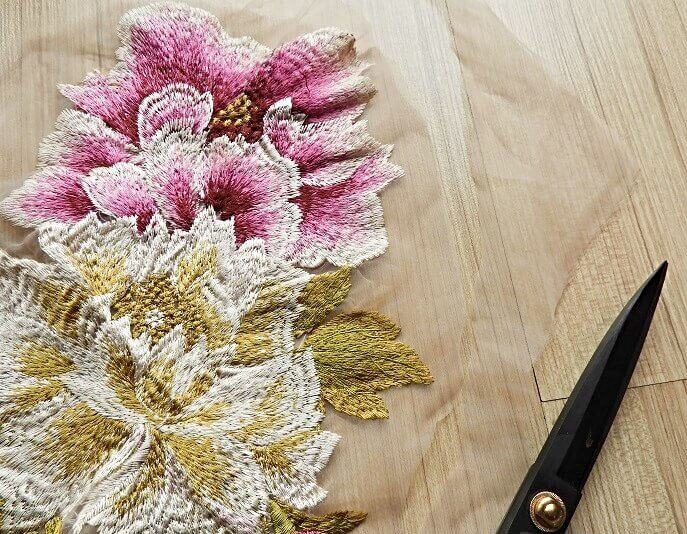
They can be applied directly on to the fabric by way of small hand stitches on the edges or with a sewing machine stitch. Whip stitch (hand) is used commonly to attach the pEmboidered Patches. Baste in place where you want the badge to be. Stitch as close as you can to the edge of the Emboidered Patches.
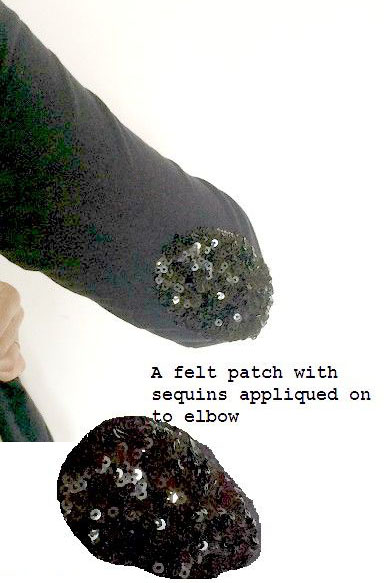
Sequined Emboidered Patches are usually used on elbows of sleeves. I have made a top with a sequined elbow Emboidered Patches and it looks great. The sequined elbow patch is simply sequins stitched on to felt piece and then appliqued on the elbow with a simple whip stitch around the edges. Checkout the 18 different kinds of beads you could use to sew this patch and the different methods to sew sequins.
- Previous [Return Home] [Print] [Go Back] Next
Products Search
