



Industry Information
Guidance: What are the types of Medals -page 1
- 2022-08-25 11:19:04
-
Guidance: What are the types of MedalsMedals: campaigns, descriptions and eligibilityDetails of the medals awarded to serving members of the armed forces, veterans and MOD employees; and who can receive them.The Ministry of Defence Medal Office issues medals to currently serving members of the armed forces, veterans and MOD employees. If you are a member of other services, such as the fire, police or prison service, you should contact your organisation’s Human Resources department in the first instance.You can apply for a medal if you meet the criteria.The information in this guide is intended to give a brief overview only.AnnouncementsCOVID-19 updateAlthough COVID-19 has impacted operations, the MOD Medal Office is accepting applications. Due to security and Data Protection reasons, the MOD Medal Office are only able to accept hard copy application forms and documentation. Please send your completed and signed application form, along with photocopies of any supporting documentation, to the address on the application form.Coronation Medal 1953The MOD Medal Office is unable to accept and assess applications for Her Majesty The Queen’s Coronation Medal 1953. (Dec 2018)Clarification of the qualification criteria for the Accumulated Campaign Service Medal (ACSM) 1994 and 2011A formal review of the Accumulated Campaign Service Medal policy and qualification criteria has been conducted to resolve ambiguity over how time on operations is counted towards the ACSM. More detailed information about the review, guidance on eligibility and how to apply can be found on The Accumulated Campaign Service Medal (ACSM) 1994 and 2011 Policy Review 2020.Decorations, Gallantry and Distinguished Conduct MedalsYou can’t apply for these awards. You must be recommended to qualify.You can read recommendations for honours and awards at The National Archives.The awards below are listed in the official ‘order of precedence’, The letters in brackets are put after a person’s surname to show their award.Victoria Cross (VC)
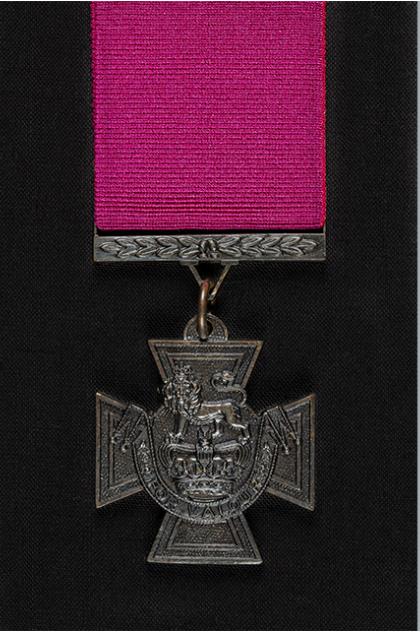 The Victoria CrossThe Victoria Cross is the premier Operational Gallantry award given for ‘most conspicuous bravery, or some daring or pre-eminent act of valour or self sacrifice, or extreme devotion to duty in the presence of the enemy’.It may be awarded to all ranks of the services and civilians and can be awarded posthumously. Individuals who perform a further act of such gallantry which would have merited a second award of the VC would be issued with a bar.The MOD Medal Office does not issue this award.George Cross (GC)
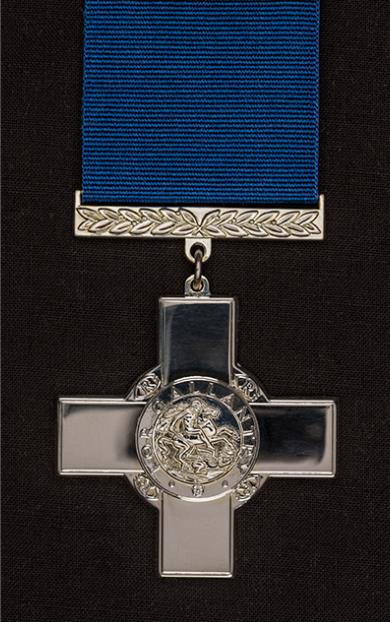 The George CrossThe George Cross is the premier award given for non-operational gallantry or gallantry not in the presence of an enemy. This is awarded for acts of the greatest heroism or of the most conspicuous courage in circumstances of extreme danger.The George Cross is equal in stature in the UK honours system to the Victoria Cross, the highest military gallantry award. This has always been the case since the introduction of the award in 1940.It may be awarded to all ranks of the services and civilians and can be awarded posthumously.The MOD Medal Office does not issue this award. Replacement awards are available from the Central Chancery of the Orders of Knighthood.Orders of the Bath and the British EmpireRead information about the Order of the Bath and the Order of the British Empire.Distinguished Service Order (DSO)The Distinguished Service Order is an operational gallantry award given for highly successful command and leadership during active operations. Personnel who perform a further act of such leadership which would have merited a second award of the DSO would be issued with a gold bar.It may be awarded to all ranks of the services. This award is not available posthumously.The MOD Medal Office does not issue this award. Replacement awards are available from the Central Chancery of the Orders of Knighthood.Conspicuous Gallantry Cross (CGC)
 The Conspicuous Gallantry CrossThe Conspicuous Gallantry Cross is an operational gallantry award given to all ranks of the services in recognition of an act (or acts) of conspicuous gallantry during active operations against the enemy. Personnel who perform a further act of such gallantry which would have merited a second award of the CGC would be issued with a silver bar.This award is available posthumously.You can replace a Conspicuous Gallantry Cross if you meet the criteria.Royal Red Cross (Class I) (RRC)The Royal Red Cross is a Meritorious award given ‘for exceptional devotion and competency in the performance of actual nursing duties…. over a continuous and long period’. Holders of the first class decoration are known as Members (RRC).These awards are only available to the nursing services and are not available posthumously.You can replace a Royal Red Cross (Class I) if you meet the criteria.Distinguished Service Cross (DSC)
 The Distinguished Service CrossThe Distinguished Service Cross is an operational gallantry award given to all ranks of the services in recognition of exemplary gallantry during active operations against the enemy at sea. Personnel who perform a further act of such gallantry which would have merited a second award of the DSC are issued with a silver bar, with rounded ends, ornamented by a crown.This award is available posthumously.You can replace a Distinguished Service Cross if you meet the criteria.Military Cross (MC)
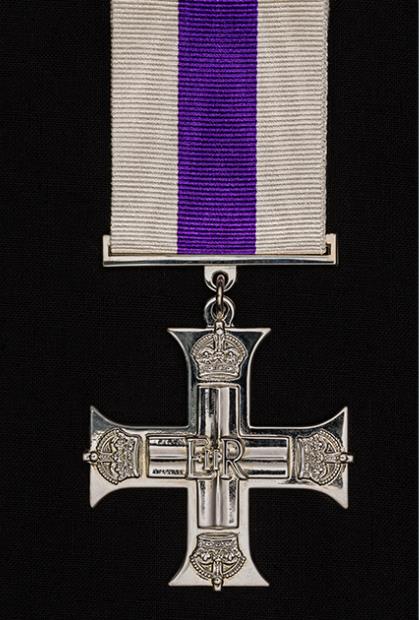 The Military CrossThe Military Cross is an operational gallantry award given to all ranks of the services in recognition of exemplary gallantry during active operations against the enemy on land. Personnel who perform a further act of such gallantry which would have merited a second MC will be issued with a silver bar ornamented by the crown.This award is available posthumously.You can replace a Military Cross if you meet the criteria.Distinguished Flying Cross (DFC)
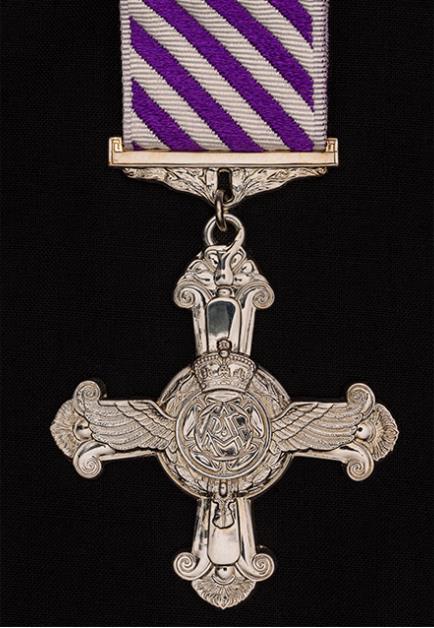 The Distinguished Flying CrossThe Distinguished Flying Cross is an operational gallantry award given to all ranks of the services in recognition of exemplary gallantry during active operations against the enemy in the air. Personnel who perform a further act of such gallantry which would have merited a second award of the DFC would be issued with a silver bar ornamented by an eagle.This award is available posthumously.You can replace a Distinguished Flying Cross if you meet the criteria.Air Force Cross (AFC)
 The Air Force CrossThe Air Force Cross is a non-operational award given to all ranks of the services in recognition of exemplary gallantry while flying not in the presence of the enemy. Personnel who perform a further act of such gallantry which would have merited the award of a second AFC are issued with a silver bar.This award is available posthumously.You can replace an Air Force Cross if you meet the criteria.Royal Red Cross (Class II) (ARRC)
 The Royal Red Cross (Class 2) front and backThe Royal Red Cross (Class II) is a Meritorious award given for special devotion and competency in the performance of actual nursing duties…. over a continuous and long period’. Holders of the second class decoration are known as Associates (ARRC). Holders of a Royal Red Cross (Class II) (ARRC) who merit a second award are promoted to a Royal Red Cross (Class I) (RRC).These awards are only available to the nursing services and are not available posthumously.You can replace a Royal Red Cross (Class II) if you meet the criteria.George Medal (GM)
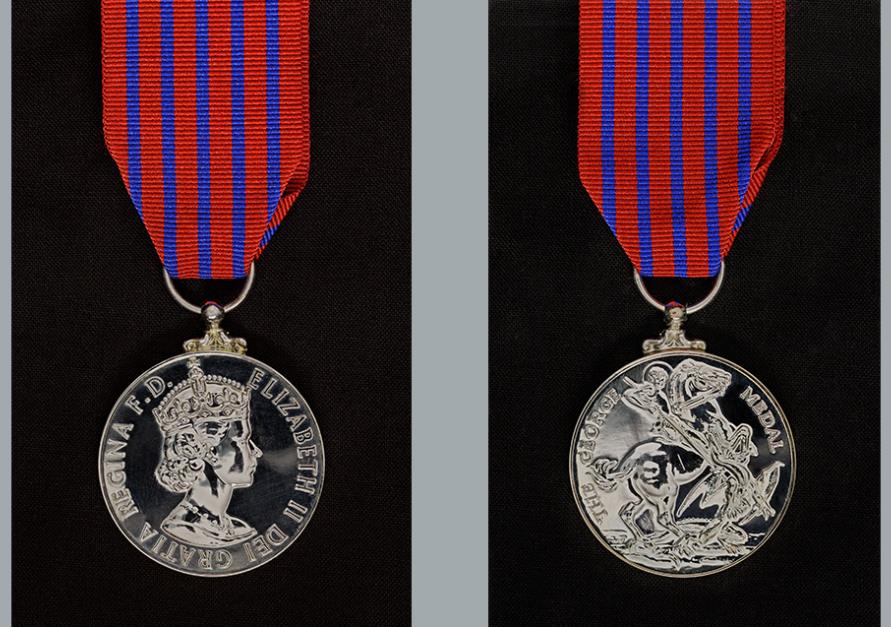 The George Medal front and backThe George Medal is awarded for conspicuous gallantry not in the presence of the enemy. A silver bar may be issued to George Medal holders who perform a further act of such bravery which would have merited award of a second GM.This award is available posthumously.The MOD Medal Office does not issue this award. Replacement awards are available from the Central Chancery of the Orders of Knighthood.Queen’s Gallantry Medal (QGM)
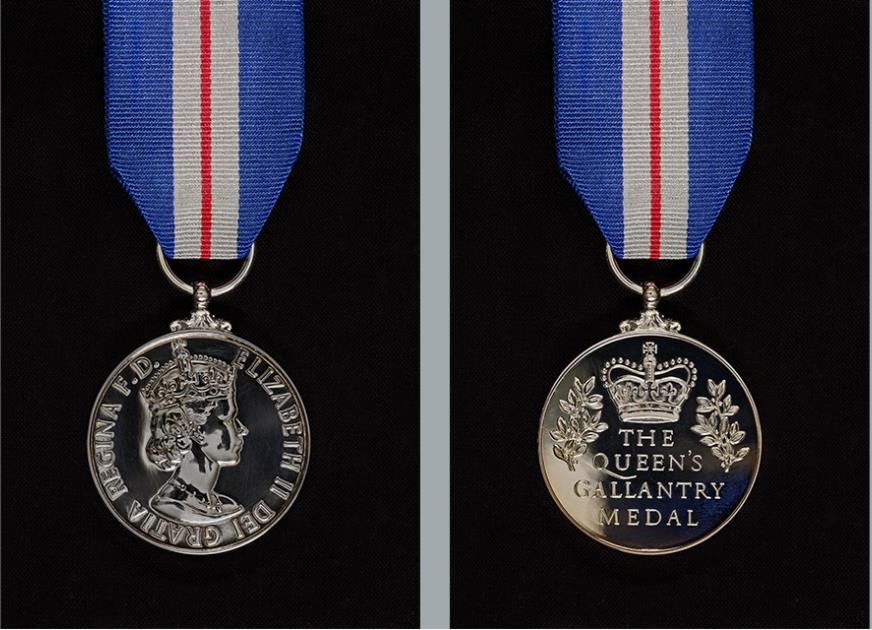 The Queen's Gallantry Medal front and backThe Queen’s Gallantry Medal is awarded to civilians for acts of exemplary bravery at a level below that of the George Medal. The QGM is also awarded to military personnel for acts which military honours would not normally be granted such as acts of exemplary bravery not in the presence of the enemy.A silver bar may be issued to QGM holders who perform a further act of such bravery which would have merited award of the QGM.This award is available posthumously.The MOD Medal Office does not issue this award. Replacement awards are available from the Central Chancery of the Orders of Knighthood.Queen’s Volunteer Reserves Medal (QVRM)
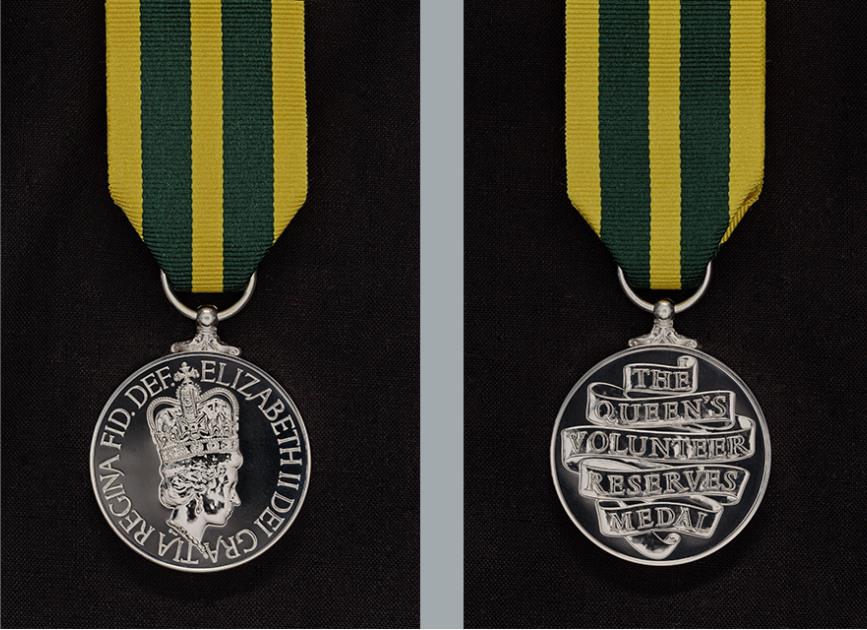 The Queen's Volunteer Reserves Medal front and backThe Queen’s Volunteer Reserves Medal is a meritorious award given for members of any rank of the Volunteer Reserve Forces, for devotion to duty and exemplary service over a period usually of at least 10 years that has been of particular value and an outstanding example to others.This award is not available posthumously.You can replace a Queen’s Volunteer Reserves Medal if you meet the criteria.Mention in Despatches
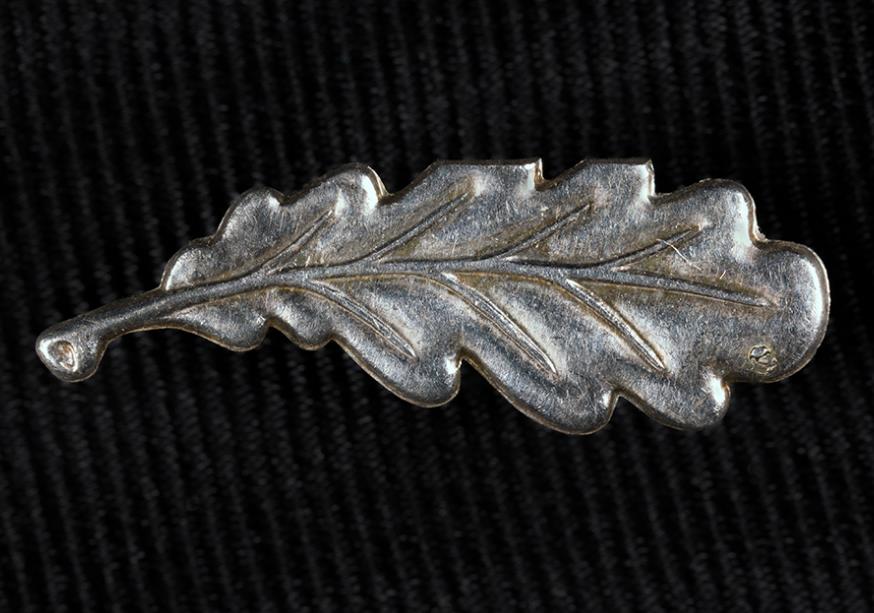 The Mentioned in Dispatches awardA Mention in Despatches is an operational gallantry award given to all ranks for an act (or acts) of bravery during active operations. This award is available posthumously.You can replace a Mention in Despatches if you meet the criteria.Queen’s Commendation for Valuable Service
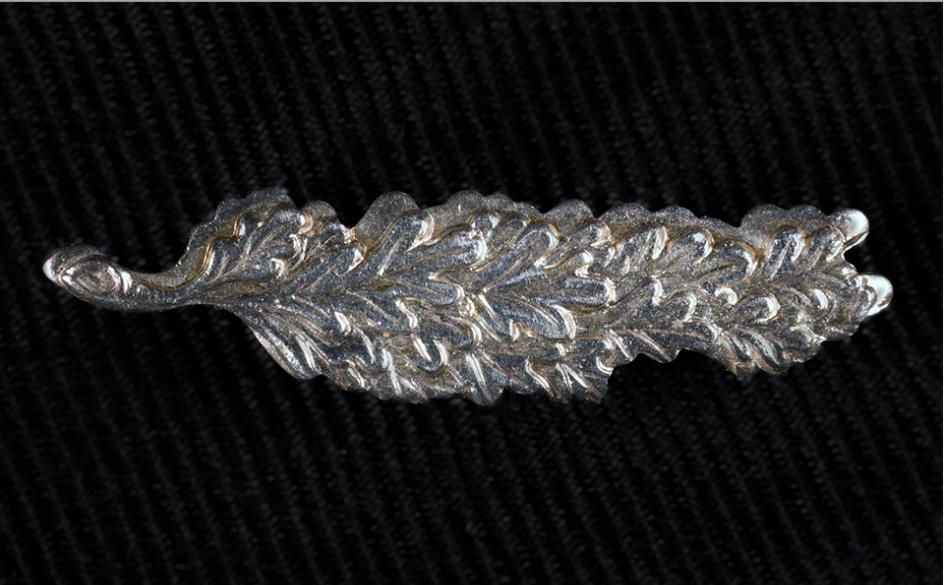 The Queen's Commendation for Valuable Service AwardA Queen’s Commendation for Valuable Service is awarded for meritorious service in an operational theatre. This award is available posthumously.You can replace a Queen’s Commendation for Valuable Service if you meet the criteria.Queen’s Commendation for Bravery
 The Queen's Commendation for Bravery awardThe Queen’s Commendation for Bravery is awarded for an act (or acts) of bravery not in the presence of the enemy. This award is available posthumously.You can replace a Queen’s Commendation for Bravery if you meet the criteria.Queen’s Commendation for Bravery in the Air
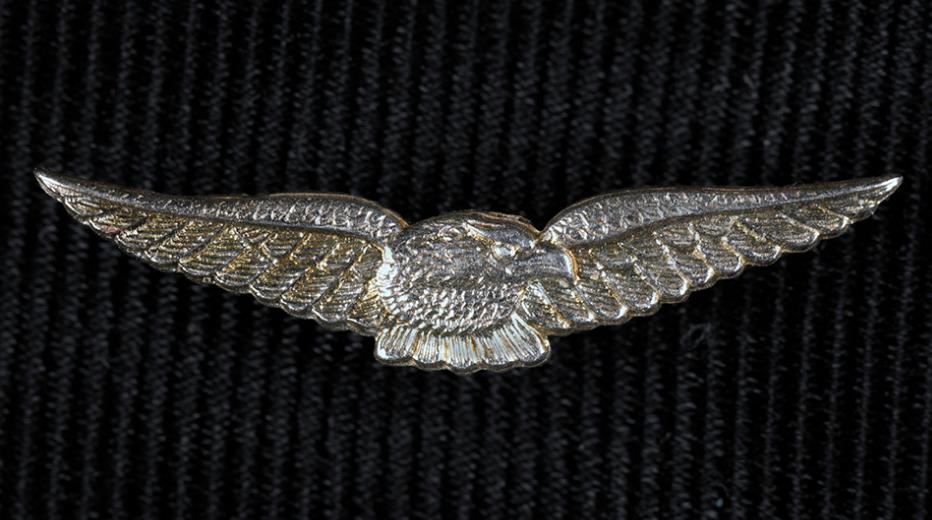 The Queen's Commendation for Bravery in the Air awardThe Queen’s Commendation for Bravery in the Air is awarded for an act (or acts) of bravery while flying not in the presence of the enemy. This award is available posthumously.You can replace a Queen’s Commendation for Bravery in the Air if you meet the criteria.World War 1 medalsAll World War 1 medals were issued to the recipient or next of kin after the war ended.You can only apply if the medal was returned, and you can provide a medal card or roll which includes this information.The MOD Medal Office does not provide replacement World War 1 medals. You can buy replicas or original named medals from a medal dealer.1914 StarThe 1914 Star was awarded to personnel who served in France and Belgium between 5 August and 22 November 1914.1914-15 StarThe 1914-15 Star was awarded to personnel who saw service in any theatre of war between 5 August 1914 and 31 December 1915, other than those who had already qualified for the 1914 Star.British War Medal 1914-20The British War Medal was awarded to personnel in recognition of the successful conclusion of World War 1. It was later extended until 1920 to cover mine-clearing services and operations in North and South Russia, the eastern Baltic, Siberia, the Black Sea and Caspian.Victory Medal 1914-19The Victory Medal was awarded to all personnel who received the 1914 or the 1914-15 Stars. It is often referred to as the Allied War Medal.World War 2 MedalsYou can apply for a World War 2 medal if you meet the criteria.Nine stars were issued for the campaigns of World War 2. The colours of the ribbons have symbolic significance and are believed to have been designed personally by King George VI.No more than 5 stars may be awarded to one person. The retrospective introduction of the Arctic Star in 2013, following the Sir John Holmes Independent Medal Review, meant that a sixth start could be worn. In all cases it is only the Arctic Star that is the sixth star that can be worn.Those who qualify for more are awarded a clasp with the title of one of the stars to which they qualify. The clasp is then attached to the ribbon of one of the other stars.If you qualify for 2 or 3 of the Atlantic, Air Crew Europe and France and Germany stars, the first star earned is awarded. You will then receive a clasp with the title of the second star earned to be worn on the ribbon of the first. A third star or clasp will not be awarded in this case.1939 to 1945 Star
 The 1939 to 1945 Star is awarded to personnel who completed operational service overseas between 3 September 1939 and 8 May 1945 (2 Sept 1945 in Far East).To apply for the 1939 to 1945 Star, you must have:180 days operational service in the army in the above qualifying areas180 days operational service as ground crew in the RAF in the above qualifying areas60 days operational service as aircrew in the RAF in the above qualifying areas180 days service afloat in operational areas in the Royal Navy in the above qualifying areasThe colours of the ribbon represent the 3 services. The star is worn with the dark blue stripe furthest from the left shoulder.Recipients of the 1939-45 Star may also be eligible for:Battle of Britain ClaspBomber Command ClaspClasps are worn on the ribbon of the 1939 to 1945 Star.To apply for the Battle of Britain Clasp to the 1939-45 Star, you must have:served as aircrew on a fighter aircraftbeen engaged in the Battle of Britain between 10 July 1940 and 31 October 1940To apply for the Bomber Command Clasp to the 1939-45 Star, you must have:served as aircrew with a UK based Bomber Command Unitserved between 3 September 1939 and 8 May 1945Atlantic Star
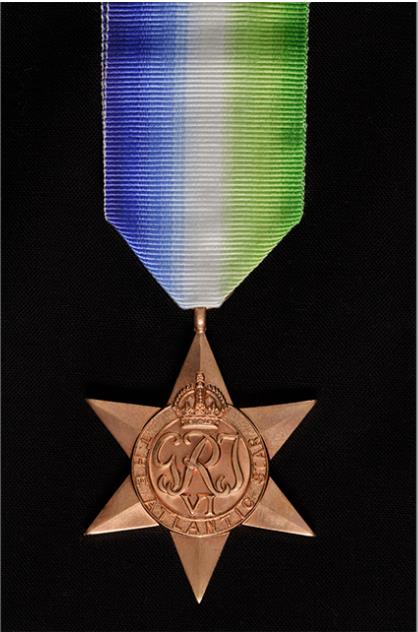 The Atlantic StarThe Atlantic Star is awarded for operational service in the Atlantic and home waters between 3 September 1939 and 8 May 1945 (2 September 1945 in Far East).To apply for the Atlantic Star, you must have already qualified for the 1939 to 1945 Star and have an additional:180 days operational service or any 6 months afloat in the army in the above qualifying areas180 days operational service afloat as ground crew in the RAF in the above qualifying areas60 days operational service as aircrew in the RAF in the above qualifying areas180 days afloat in operational areas in the Royal Navy in the above qualifying areasThe colours of ribbon represent the Atlantic Ocean. The Atlantic Star is worn with the blue edge furthest from the left shoulder.Air Crew Europe Star
 The Air Crew Europe Star is earned almost exclusively by RAF personnel for operational flying from UK bases over Europe between 3 September 1939 and 5 June 1944.To apply for the Air Crew Europe Star, you must have already qualified for the 1939 to 1945 Star and have an additional:60 days operational flying in the army in the above qualifying areas60 days operational flying for the RAF in the above qualifying areas60 days operational flying for the Royal Navy in the above qualifying areasThe ribbon colours of the ribbon represent the sky, night flying and enemy searchlights to symbolise the continuous service of the Air Force by night and day.Arctic Star
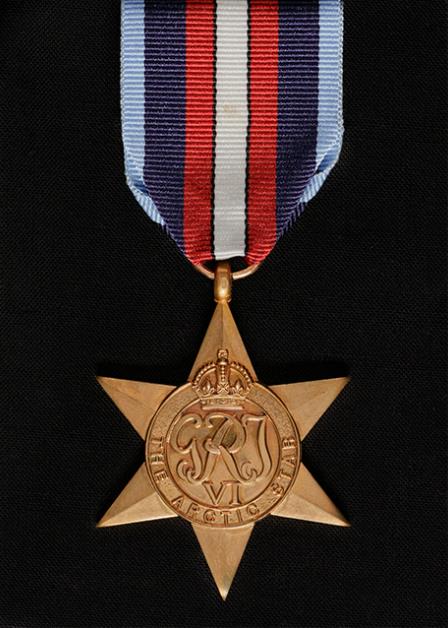 The Arctic Star is awarded for operational service of any length north of the Arctic Circle (66, 32 N) between 3 September 1939 and 8 May 1945. The Arctic Star commemorates the Arctic Convoys that sailed to North Russia in support of the Russian allies.To apply for the Arctic Star, you must have:service of any length either afloat or as part of land operations north of the Arctic Circle in the army, Royal Navy, Merchant Navy, and RAF ground crewservice of any length as RAF aircrew who landed or served in the air north of the Arctic Circleapproved civilians who served in support of military operations north of the Arctic CircleAfrica Star
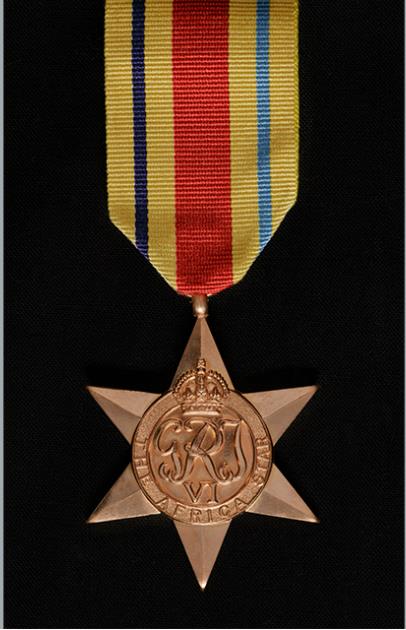 The Africa Star is awarded to personnel who served in North Africa, Malta or Egypt between 10 June 1940 and 12 May 1943.To apply for the Africa Star, you must have:1 day of operational service in the army in the above qualifying areas1 day of operational service as ground crew in the RAF in the above qualifying areas1 operational sortie as aircrew in the RAF in the above qualifying areas1 day afloat in the Mediterranean in the Royal NavyThe colours of the ribbon symbolise the desert and the 3 services.Pacific Star: Malaya, Singapore and the Pacific Ocean
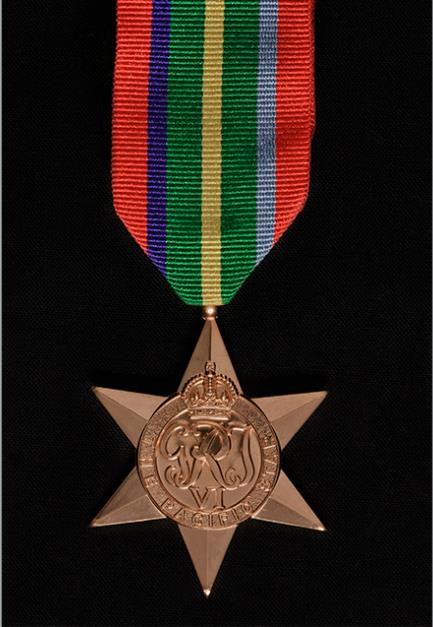 Pacific StarThe Pacific StarThe Pacific Star is awarded for operational service in Malaya, Singapore, China, Hong Kong or Sumatra between 8 December 1941 and 2 September 1945.To apply for the Pacific Star, you must have:1 day of operational service in the army in the above qualifying areas1 day of operational service as ground crew in the RAF in the above qualifying areas1 operational sortie as aircrew in the RAF in the above qualifying areas1 day afloat on operational service in the above qualifying areas in the Royal Navy and already qualified for the 1939 to 1945 StarThe colours of the ribbon represent the jungle, the beaches and the 3 services.If you also qualify for the Burma Star, you will only be awarded the first star you earned. You will then receive a clasp with the title of the second star earned, which is worn on the ribbon of the first.Burma Star
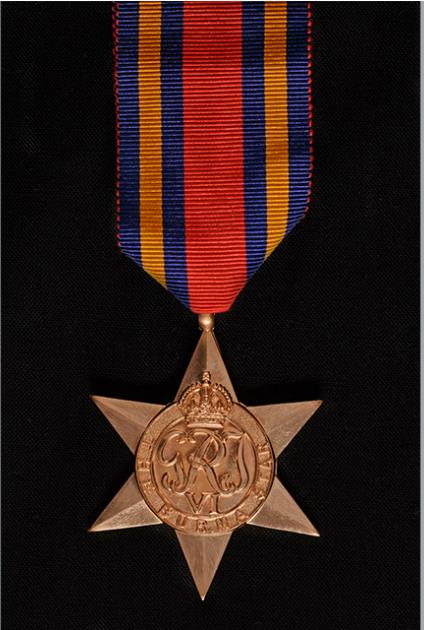 The Burma StarThe Burma Star is awarded for operational service in Burma between 11 December 1941 and 2 September 1945. Those serving in Bengal and Assam in India and China, Hong Kong, Malaya or Sumatra between other specified dates may also qualify.To apply for the Burma Star, you must have:1 day of operational service in the army in the above qualifying areas1 day of operational service as ground crew in the RAF in the above qualifying areas1 operational sortie as aircrew in the RAF in the above qualifying areas1 day afloat on operational service in the above qualifying areas in the Royal Navy and already qualified for the 1939 to 1945 StarThe colours of the ribbon represent the sun, British and Commonwealth forces.If you also qualify for the Pacific Star, you will only be awarded the first star earned. You will then receive a clasp with the title of the second star earned which is worn on the ribbon of the first.Italy Star
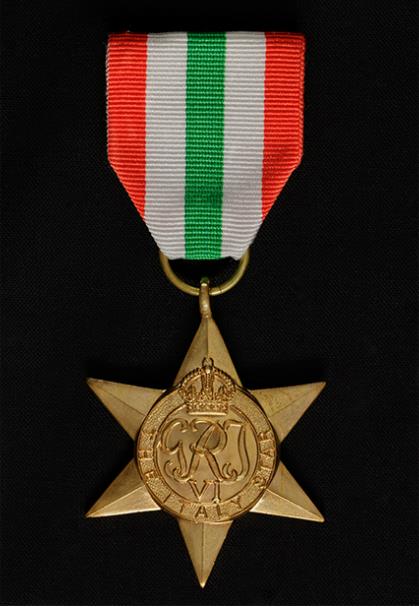 The Italy StarThe Italy Star is awarded for operational service in Sicily or Italy between 11 July 1943 and 8 May 1945. Those who served in Yugoslavia, Greece, Corsica or Sardinia between certain other specified dates will also qualify.To apply for the Italy Star, you must have:1 day of operational service in the army in the above qualifying areas1 day of operational service as ground crew in the RAF in the above qualifying areas1 operational sortie as aircrew in the RAF in the above qualifying areas1 day afloat on operational service in the above qualifying areas in the Royal Navy and already qualified for the 1939 to 1945 StarThe colours of the ribbon represent the national colours of Italy.France and Germany Star
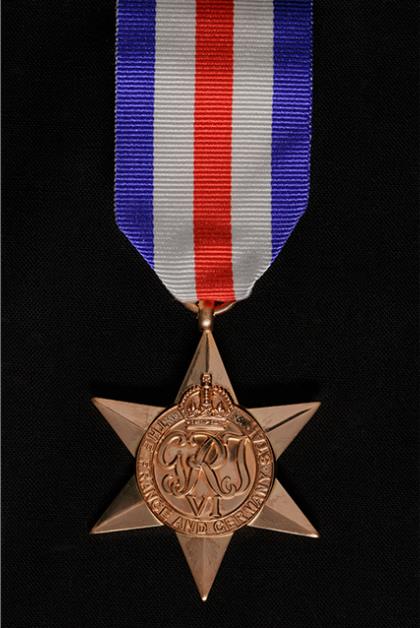 The France and Germany Star is awarded for operational service in France, Belgium, Luxembourg, The Netherlands or Germany between 6 June 1944 and 8 May 1945.To apply for the France and Germany Star, you must have:1 day of operational service in the army in the above qualifying areas1 day of operational service as ground crew in the RAF in the above qualifying areas1 operational sortie as aircrew in the RAF in the above qualifying areas1 day afloat in operational areas of the North Sea in the Royal Navy (provided service was directly in support of land operations)The colours of the ribbon represent the national colours of the United Kingdom, France and The Netherlands.Defence Medal
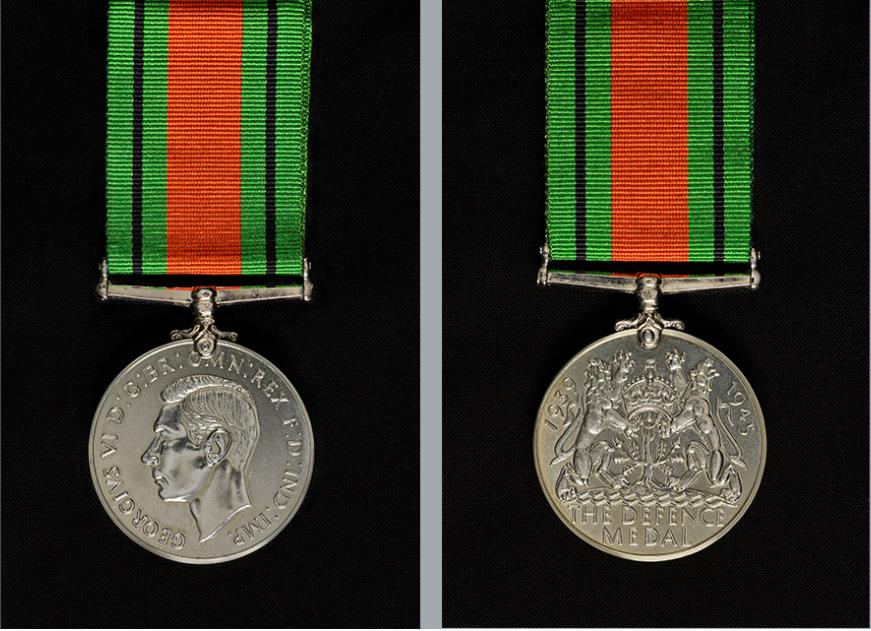 The Defence Medal front and backThe Defence Medal is awarded for non-operational service such as those service personnel working in headquarters, on training bases and airfields and members of the Home Guard. The medal is also awarded for non-operational service overseas for example in India or South Africa.To apply for the Defence Medal, you must have either:1080 days (3 years) service in the UK between 3 Sep 1939 and 8 May 19451080 days (3 years) service in the Home Guard between 14 May 1940 and 31 Dec 1944 (you will also need to fill out and send the Home Guard service questionnaire)360 days (1 year) non operational service overseas between 3 Sep 1939 and 2 Sep 1945180 days non operational service in an overseas area deemed to be closely threatened or subject to air attack between 3 September 1939 and 8 May 1945The colours of the ribbon symbolise enemy attacks on Britain’s ‘green and pleasant land’ and the black out.War Medal 1939 to 1945
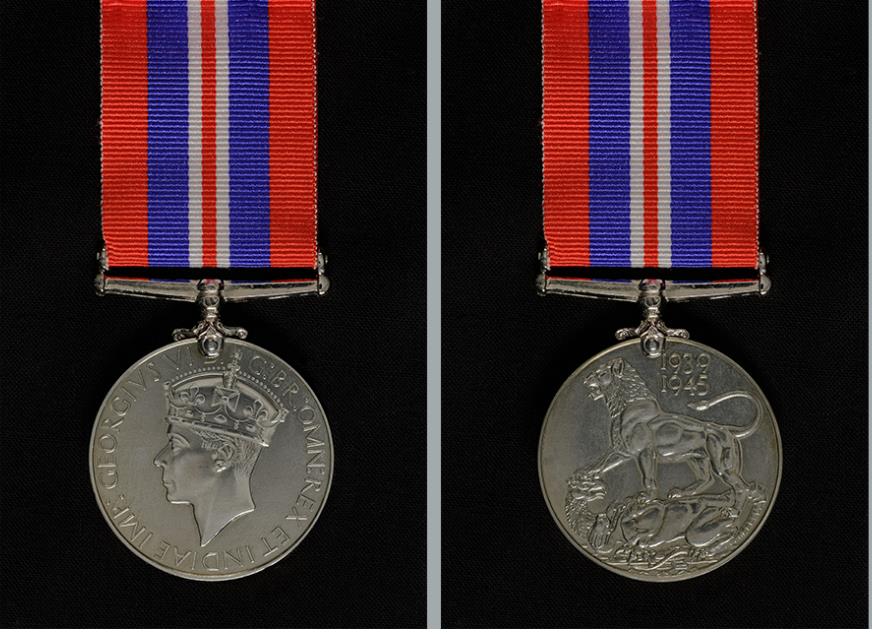 War Medal 1939 to 1945 front and backThe War Medal is awarded to all full time personnel of the armed forces wherever they were serving. The medal was granted in addition to campaign stars and the Defence Medal.To apply for the War Medal, you must have served at least 28 days between 3 September 1939 and 2 September 1945.The colours of the ribbon represent the Union Jack.Legion d’HonneurThe Legion d’Honneur is issued by the French Government to commemorate the 70th anniversary of the Normandy Landings.This medal is not issued by the MOD Medal Office. Find out how you can apply for the Legion d’Honneur.Post World War 2 campaign medalsGeneral Service Medal 1918-62
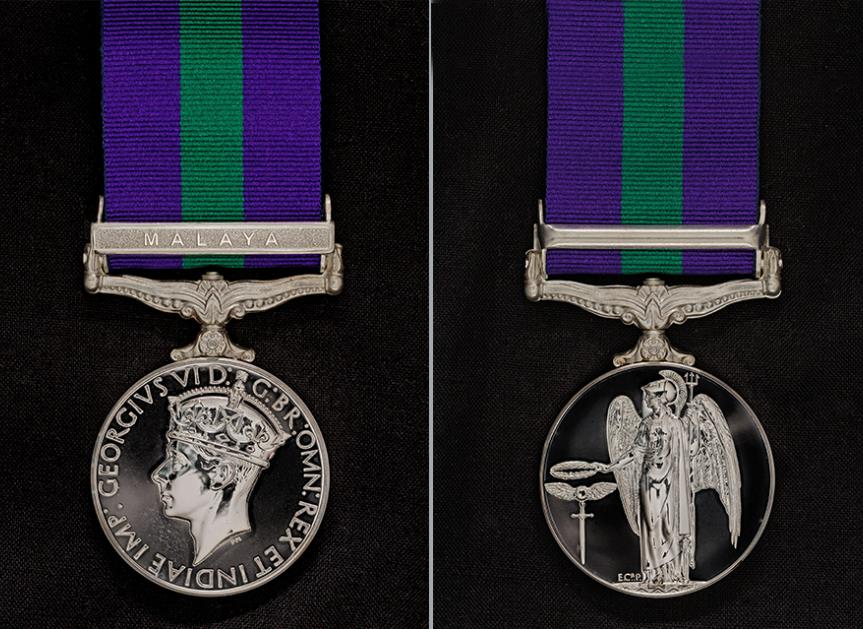 General Service Medal 1918 to 1962General Service Medal 1918 to 1962 with Malaya clasp front and backThe General Service Medal (GSM) 1918-1962 was awarded to army and RAF personnel who meet the qualifying criteria for service in any of the following geographical areas:South PersiaKurdistanIraqNorth West PersiaSouthern Desert IraqNorthern KurdistanPalestineSouth East Asia 1945 to 1946Palestine 1945 to 1948MalayaCyprusNear EastArabian PeninsulaBruneiCanal ZoneThe medal is also awarded for:Bomb and Mine Clearance 1945 to 1949Bomb and Mine Clearance 1945 to 1956Berlin AirliftIf you think you might be eligible, contact the MOD Medal Office.If your application is successful, you’ll be awarded the GSM with a clasp for the relevant geographical area.If you become eligible for a further clasp, you will not get a second medal. The clasp should be added to the GSM medal ribbon, worn above the first clasp.Naval General Service Medal 1915
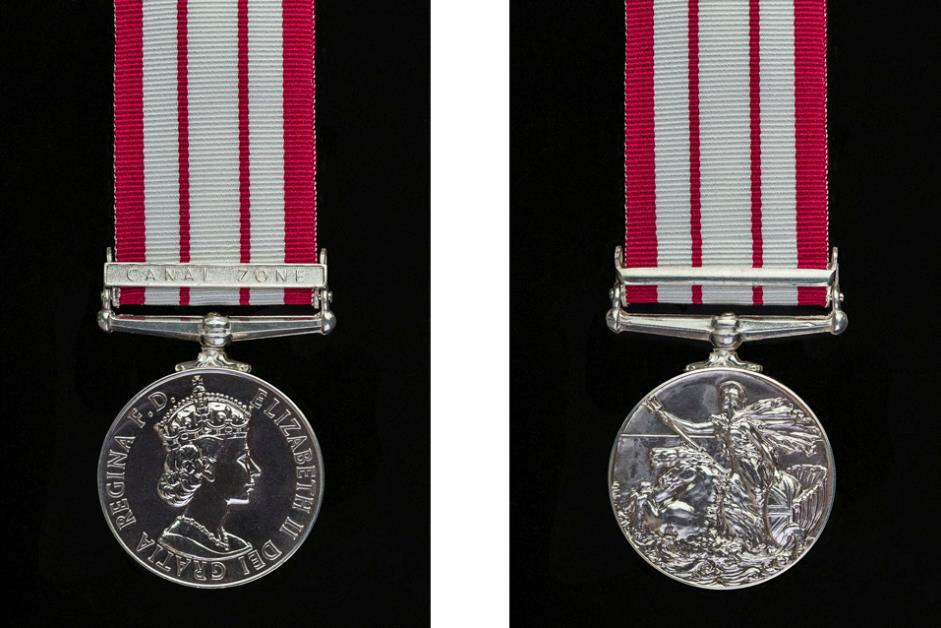 Naval General Service Medal 1915 - front and backThe Naval General Service Medal (GSM) 1915 was awarded to Royal Navy and Royal Marine personnel who meet the qualifying criteria for service in any of the following geographical areas:Palestine 1936-1939South East Asia 1945-46Palestine 1945-48MalayaYangtze 1949Canal ZoneCyprusNear EastArabian PeninsulaBruneiThe medal is also awarded for:Minesweeping 1945-51Bomb and Mine Clearance 1945-49Bomb and Mine Clearance 1945-53Bomb and Mine Clearance MediterraneanBerlin AirliftIf you think you might be eligible, contact the MOD Medal Office.If your application is successful, you’ll be awarded the Naval GSM with a clasp for the relevant geographical area.If you become eligible for a further clasp, you will not get a second medal. The clasp should be added to the Naval GSM medal ribbon, worn above the first clasp.
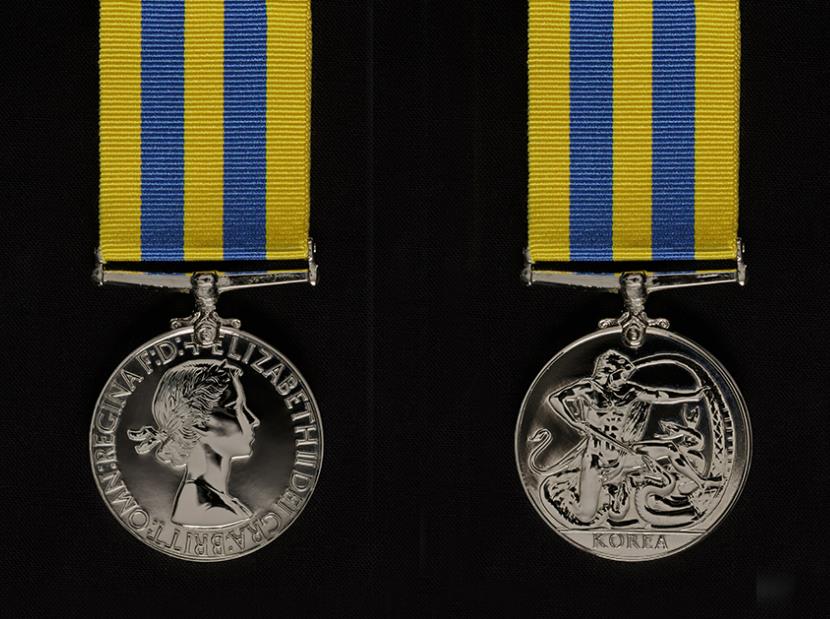 The Korea Medal front and backThe Korea Medal is awarded to personnel who participated in the Korean War between July 1950 and 27 July 1953.To apply for the Korea Medal, you must have either:1 day of service on land in Korea in the army, RAF or Royal Navy1 operational sortie over Korea or Korean Waters in the RAF28 days service afloat on ships or crafts engaged in operations off the Korean coast in the Royal NavyGeneral Service Medal 1962-2007
 The General Service Medal 1962 to 2007 with Cyprus clasp front and backThe General Service Medal (GSM) 1962-2007 is awarded to army, RAF, Royal Navy and Royal Marines personnel who meet the qualifying criteria for service in any of the following geographical areas:BorneoCyprus 1963-64RadfanSouth ArabiaMalay PeninsulaNorthern IrelandDhofarLebanonGulfKuwaitNorth Iraq and South TurkeyThe medal is also awarded for:Mine Clearance: Gulf of SuezAir Operations IraqIf you think you might be eligible, contact the MOD Medal Office.If your application is successful, you’ll be awarded a GSM with a clasp for the relevant geographical area. If you become eligible for a further clasp, you will not get a second medal. The clasp should be added to the GSM ribbon, worn above the first clasp.Pingat Jasa Malaysia MedalThe Pingat Jasa Malaysia (PJM) Medal is issued by the Malaysian Government to members of the British and Commonwealth armed forces for service of 90 days or more in Malaysia and Singapore. The qualifying dates are:Malaysia during the period 31 August 1957 and 12 August 1966 inclusiveSingapore during the period 3 August 1957 and 9 August 1965 inclusiveApplications for the PJM Medal are processed by the Malaysian Government. All applications must be endorsed an official organisation such as the Ministry of Defence or veterans associations before the medal can be issued.The MOD Medal Office can endorse an application for the PJM Medal. If you think you might be eligible, complete the Pingat Jasa Malaysia (PJM) medal application form (MS Word Document, 49.7 KB) and send to the MOD Medal Office for endorsement.The PJM Medal is not issued by the MOD Medal Office.South Atlantic Medal
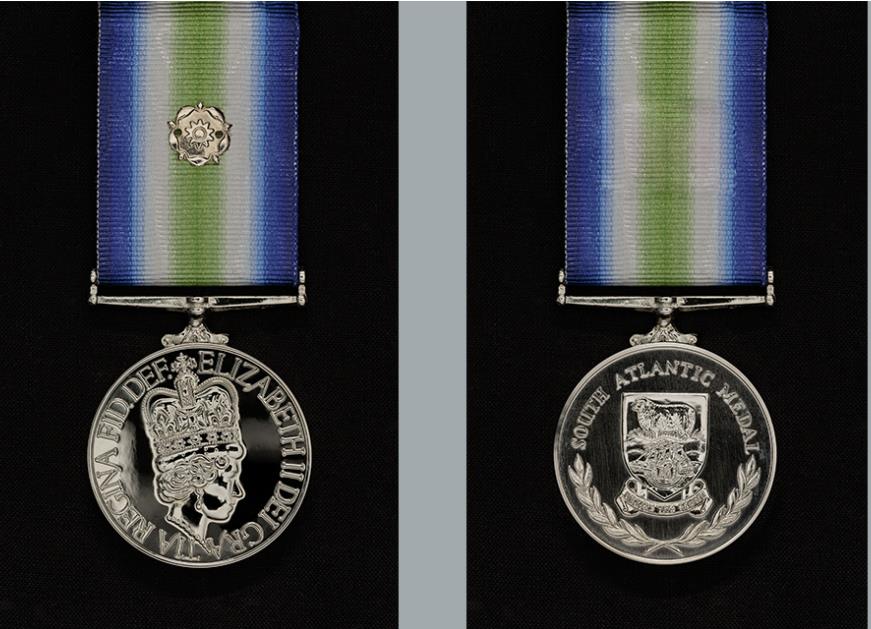 The South Atlantic medal front and backThe South Atlantic Medal was awarded for service in the Falklands Islands, the dependencies, or in the South Atlantic between 2 April 1982 and 14 June 1982.To apply for the South Atlantic Medal and rosette , you must have either:1 day of service in the Falkland Islands or their dependencies, or in the South Atlantic, south of 35 south and north of 60 south before 14 June 19821 operational sortie south of Ascension Island before 14 June 1982To apply for the South Atlantic Medal without the rosette, you must have:30 days service or more in the South Atlantic, south of 7 south and north of 60 southcompleted service no later than 21 October 1982The colours of the ribbon symbolise the Atlantic Ocean.Gulf Medal 1990-1991
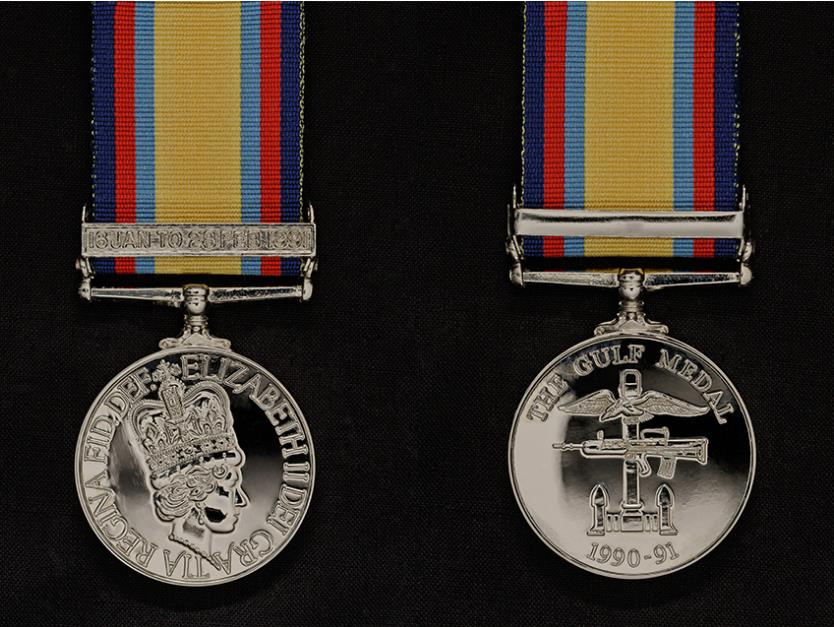 Gulf War MedalGulf War Medal with 16 Jan to 28 February 1991 Clasp front and backThe Gulf Medal was awarded to personnel for service in the areas of operations in the Middle East.To apply for the Gulf medal only, you must have:30 days continuous service between 2 August 1990 and 7 March 1991served in the area of operations as defined in the regulationsTo apply for the medal with clasp ’16 Jan to 28 Feb 1991’, you must have:7 days continuous service between 16 Jan and 28 Feb 1991served in the area of operations as defined in the regulationsTo apply for the medal with clasp ‘2 Aug 1990’, you must have:been a member of the Kuwait Liaison Teamserved in Kuwait on 2 August 1990The colours of the ribbon represent the desert landscape and the 3 services.Kuwaiti Liberation Medal and the Saudi Liberation of Kuwait MedalThe governments of Kuwait and Saudi Arabia issued these medals to the allied personnel who had taken part in the liberation of Kuwait.The Queen granted permission for British service personnel to accept but not wear these medals.Operational Service Medal - Iraq and Syria
 The Operational Service Medal (OSM) Iraq and Syria is awarded to personnel who completed operational service in or over the landmass of Iraq and Syria, or provided a significant and direct contribution outside of Iraq and Syria, to Operation SHADER since 9 August 2014 (end date to be decided).To apply for the Operational Service Medal - Iraq and Syria with clasp Iraq and Syria you must have either:30 days continuous or 45 days cumulative operational service in the international boundaries of Iraq and Syria10 operational sorties over Iraq and/or 6 operational sorties over Syria with the RAFTo apply for the Operational Service Medal Iraq and Syria, without clasp Iraq and Syria you must have either:50 hours on an Operation SHADER mission as an RPAS pilot, sensor or mission intelligence coordinator45 days continuous or 60 days cumulative service with significant support or direct contribution to Op SHADER with specific units and specified locations, which include Al Udeid, Crete, Cyprus, Jordan, Kuwait and TurkeyThe Iraq and Syria clasp is to be worn on the ribbon of this medal, denoting the risk and rigour of the task. The colours of the ribbon represent the large number of airframes used in the operation, and the 3 services.Operational Service Medal – Sierra LeoneSierra Leone Medal
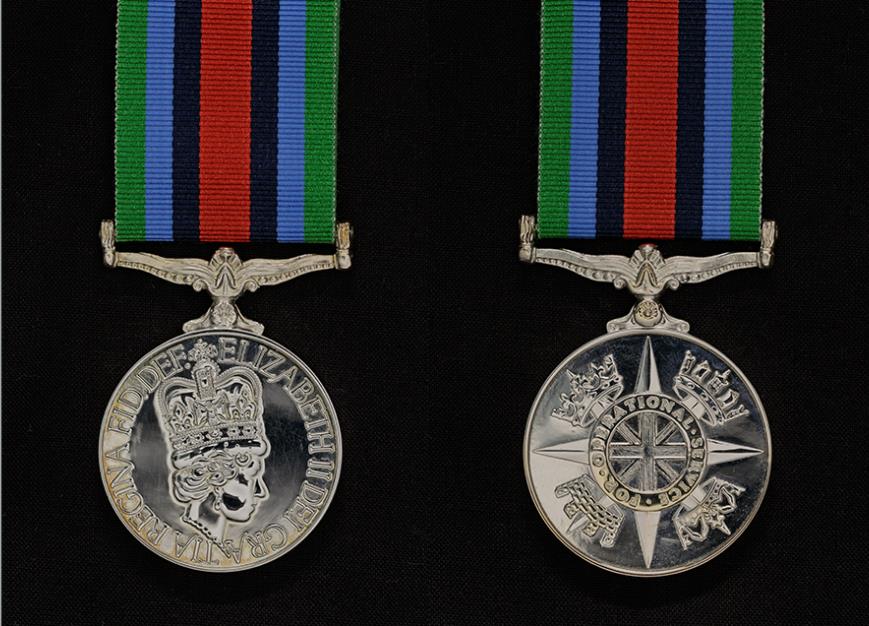 Sierra Leone MedalThe Operational Service Medal (OSM) Sierra Leone is awarded to personnel who completed operational service in Sierra Leone or the Joint Operational Area between 5 May 2000 to 31 July 2002.To apply for the Operational Service Medal - Sierra Leone, you must have either:1 day of service on Op Barras or Op Maidenley14 days continuous or accumulated service on Op Palliser30 days continuous or accumulated service on Op Basillica or SilkmanA silver rosette may be issued for service on Operations Maidenly and Barras. The rosette is worn on the ribbon of the OSM.The colours of the ribbon represent the jungle and the 3 services.Operational Service Medal – Afghanistan
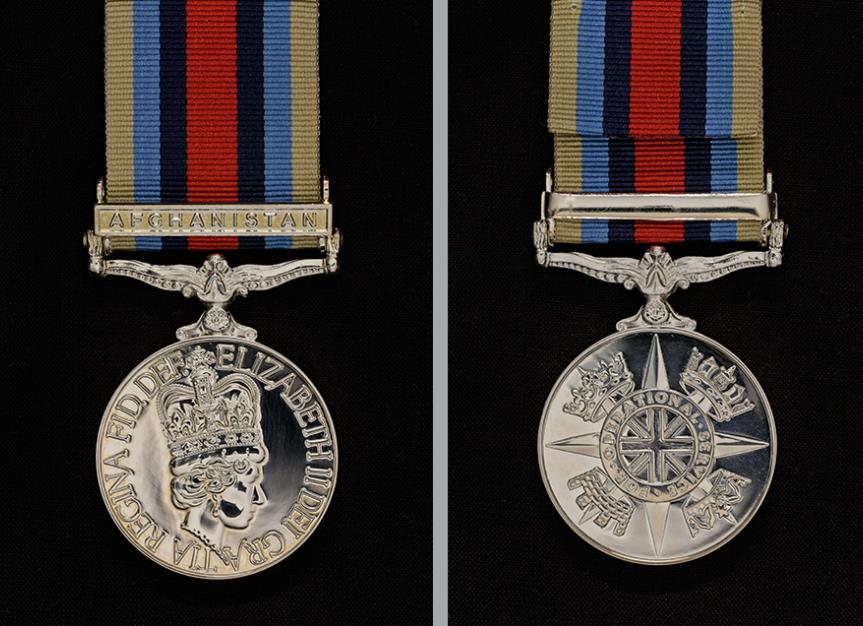 Afghanistan MedalThe Afghanistan Medal with Clasp front and backThe Operational Service Medal (OSM) Afghanistan is awarded to personnel who complete operational service on or in support of, operations in Afghanistan from 11 September 2001.You’ll automatically receive the medal if you’re currently serving and have deployed on a current operation, you don’t need to apply. If you have not received your medal and think you might be entitled, speak to your Unit HR.To apply for the Operational Service Medal - Afghanistan, you must have:served under the command of the UK Joint Task Force Commander30 days continuous service or 45 days aggregated serviceserved in either Zone 1 or Zone 2 (service in Zone 1 will be recognised with a clasp to the OSM)The colours of the ribbon represent the landscape of Afghanistan and the 3 services.Operational Service Medal – Democratic Republic of CongoThe Democratic Republic of the Congo Medal
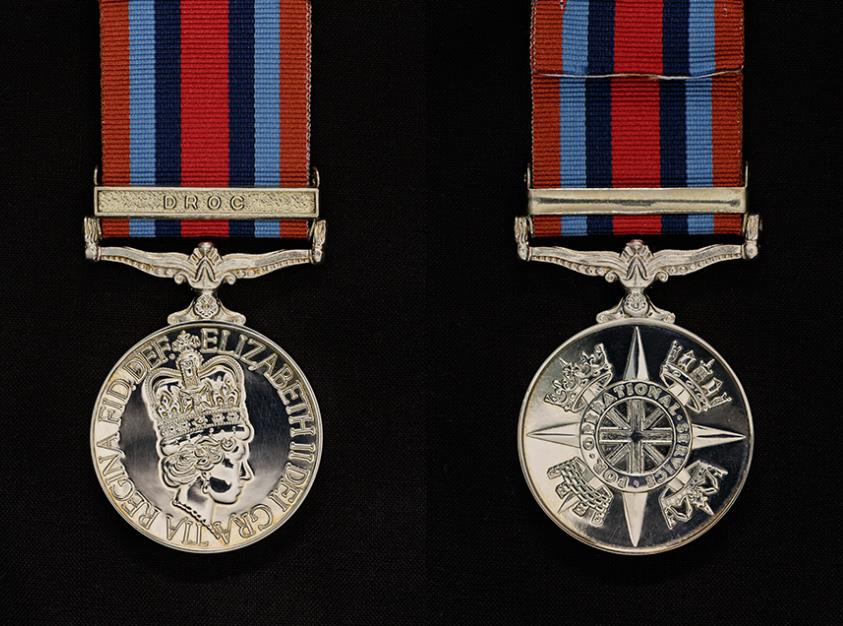 The Democratic Republic of the Congo MedalThe Operational Service Medal (OSM) Democratic Republic of Congo (DROC) is awarded to personnel who completed operational service in Bunia in the Ituri Province in the Democratic Republic of Congo between 14 June and 10 September 2003.To apply for the Operational Service Medal - DROC, you must have either:25 days operational service5 operational sorties with the RAFThe Operational Service Medal will be issued with a DROC clasp which should be worn on the ribbon.The colours of the ribbon represent the landscape of DROC and the 3 services.Iraq Medal
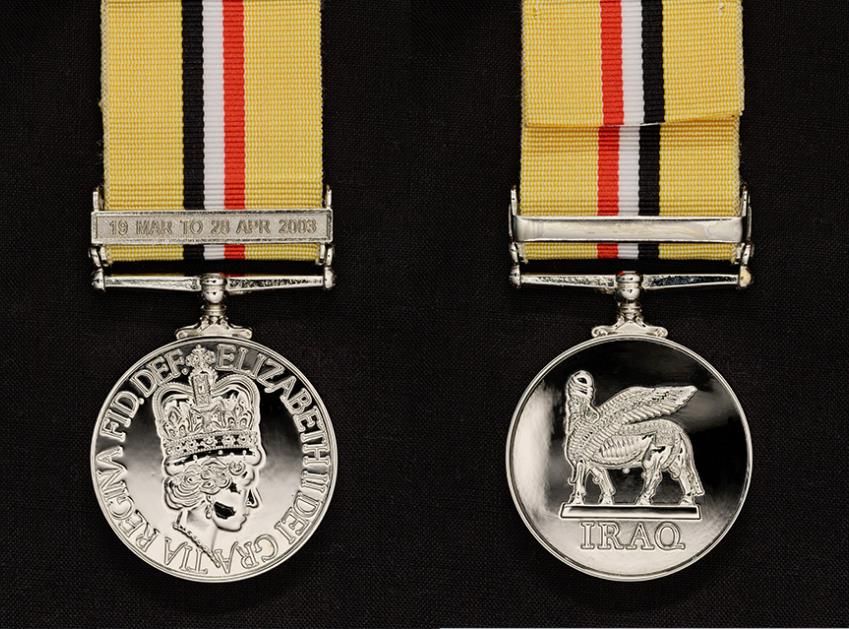 The Iraq Medal with 19 Mar to 28 Apr 2003 Clasp front and backThe Iraq medal is awarded to personnel who completed operational service in Iraq between 20 January 2003 and 22 May 2011.To be considered for the medal with clasp ’19 Mar – 28 Apr 03’, you must have:served in Zone One between 19 March 03 and 28 April 03completed 7 days continuous service, orserved as aircrew flying into Zone One and completed 2 or more operational sorties (no more than 1 sortie per day)To be considered for the medal only, you must have:completed 30 days continuous service in either Zone One or Zone Two, orserved as aircrew flying into Zones One or Two, orserved as aircrew based outside of Iraq and completed 10 operational sorties (no more than 1 sortie per day)The clasp is to be worn on the ribbon of the medal. The colours of the ribbon represent the Iraq landscape.Criteria for this medal is complex and the above is a guide only. If you think you might be eligible, contact the MOD Medal Offi
- Previous [Return Home] [Print] [Go Back]
Products Search
